Research robots will take on more lab work, field work, and repeat testing as their software improves. The hard part won't be making a robot move; it will be proving that its results are sound when conditions change.
- Robots will handle more repeatable tasks, while people set the test goals.
- Better sensors won't remove the need for clean data and checks.
- Remote control will remain useful when a robot meets an unfamiliar problem.
Where research robots will work
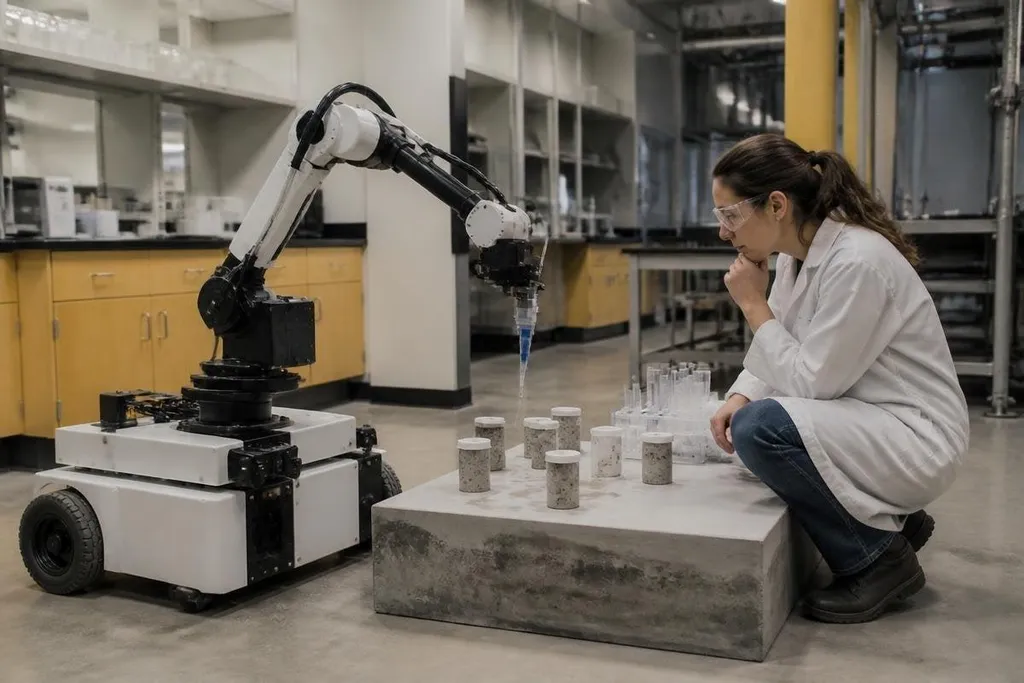
A research robot can collect samples, move tools, inspect places that people can't reach, or repeat the same motion for hours. Those jobs suit machines because the task can be written as a set of steps and checked against a result.
That pattern will spread beyond lab benches. Robots may work in farms, factories, oceans, disaster sites, and other places where a person needs more time, safety gear, or travel than the task allows.
Each setting brings different ground, light, weather, obstacles, and rules, so a robot built for one job won't become a general research worker by changing its software alone.
The useful change will come from robots that can gather better records while they work. A research team needs to know where the robot moved, what its sensors saw, which tool it used, and when a person took control. Without that record, a successful task is hard to repeat.
The software will make the difference
Research robots already depend on software that turns sensor data into movement. Future systems will need to spot when the data no longer fits the task, then slow down, ask for help, or stop in a safe place.
That calls for a clear split between machine work and human judgment. A robot can sort samples or repeat a path. A researcher still needs to decide whether the sample was handled correctly and whether the result supports the next test.
Simulation will help teams test software before putting a robot near costly equipment. It won't replace physical trials. A simulated floor has to stand in for loose soil, glare, dust, vibration, or a tool that does not sit exactly where the model expects it.
A clean simulation result still leaves open how a research robot handles glare, dust, vibration, and misplaced tools. Dated reports from Robot24.com can place the task beside its test setting, human input, and failure record. That distinction lets you judge whether the result survived physical trials or stayed inside a model.
The limits will stay visible
The biggest limit is uncertainty. A robot may complete a known task many times, then fail when an object changes shape or a sensor gets dirty. That failure doesn't make the system useless, but it changes the kind of work people can assign to it.
Remote operation will remain part of the design. A person can guide the robot through a rare event, while the software handles routine movement. The team then has to record when control changed hands, because a task completed by a person says something different from a task completed by the robot alone.
Power, repairs, and access will matter too. A field robot needs a way to recharge, carry spare parts, recover after a fall, and send its data back to the team. A machine that works well for one afternoon may still be a poor research tool if nobody can service it at the site.
I’d judge a research robot by the quality of its records before its range of motions. That sounds less exciting than a new demo, but it gives another team a fair chance to repeat the work.
A practical test for future systems
Before a lab buys or builds a research robot, check these points:
- Task boundary: Write down the exact work the robot must do, including the cases that need a person.
- Data record: Confirm that the system stores sensor readings, actions, timing, and operator input.
- Failure response: Test what happens after a blocked path, lost signal, weak battery, or bad sensor reading.
- Repeat test: Run the same task again with small changes to the object, surface, or lighting.
- Service plan: Set out how the team will charge, repair, reset, and recover the robot.
Those checks connect the machine to the research question. They also show where a claim ends and where more testing begins.
The next useful research robot will be the one that can say, through its records, what it did and when it needed help. The open question is how much freedom a lab should grant before that record is good enough.